“China wine is just bulk.” That take is ten years out of date. When LVMH plants at 2,600 meters in Yunnan and a family estate in Ningxia beats out Bordeaux at Decanter, that’s not a novelty story anymore. That’s a category forming.
For most wine professionals, China still registers as a consumption story — a vast market of imported Bordeaux and Australian Shiraz. But a fundamental shift has been underway for over a decade, and the results are now impossible to ignore. At the eastern foot of the Helan Mountains in Ningxia Hui Autonomous Region, approximately 200 wineries now cultivate vines across roughly 38,000 hectares of arid, sandy soil at elevations exceeding 1,000 meters above sea level.1 The region’s extreme continental climate — scorching summers, bitterly cold winters, fewer than 200 millimeters of annual rainfall, and over 3,000 hours of sunshine — produces Cabernet Sauvignon of surprising concentration and structure. The comparison to Napa Valley is frequently drawn, but Ningxia’s winemakers face a challenge Napa never did: every autumn, vines must be untrellised, bent to the ground, and buried under mounds of earth to survive winters that plunge below minus 20°C. This labor-intensive practice of mai tu (vine burial) adds significant cost per hectare and remains one of the industry’s defining constraints.2
Producers Writing the New Canon
The names emerging from China’s wine regions carry increasingly serious credentials. Helan Qingxue, a modest family estate in Ningxia, stunned the international community in 2011 when its Jia Bei Lan Cabernet blend became the first Chinese wine to receive a Decanter World Wine Awards International Trophy — a watershed moment that reframed what Chinese terroir could achieve.3 Silver Heights, founded by Bordeaux-trained winemaker Emma Gao and her French husband Thierry Courtade, consistently produces elegant, age-worthy reds that challenge the notion that Chinese wine is a novelty. Château Changyu Moser XV, a collaboration between China’s oldest wine company (founded 1892 in Shandong) and Austrian winemaker Lenz Moser, operates a state-of-the-art facility in Ningxia that bridges European technique with local terroir. Other estates to watch include Legacy Peak and Kanaan, both producing refined expressions of Helan Mountain fruit. Meanwhile, in the highlands of Yunnan province — not Ningxia — Ao Yun, backed by LVMH, crafts one of China’s most prestigious (and expensive) wines from Cabernet Sauvignon and Cabernet Franc grown at a staggering 2,200 to 2,600 meters of altitude near the Tibetan border.4
| Producer | Region | Notable Detail |
|---|---|---|
| Helan Qingxue | Ningxia | First Chinese wine to win Decanter International Trophy (Jia Bei Lan 2009) |
| Silver Heights | Ningxia | Founded by Emma Gao; Bordeaux-trained; elegant, age-worthy reds |
| Château Changyu Moser XV | Ningxia | Joint venture with Lenz Moser; parent company est. 1892 in Shandong |
| Legacy Peak | Ningxia | Refined single-vineyard Cabernets from Helan Mountain foothills |
| Kanaan | Ningxia | Boutique estate; acclaimed Riesling alongside red portfolio |
| Ao Yun (LVMH) | Yunnan | Ultra-premium; 2,200–2,600m altitude; near Tibetan border |
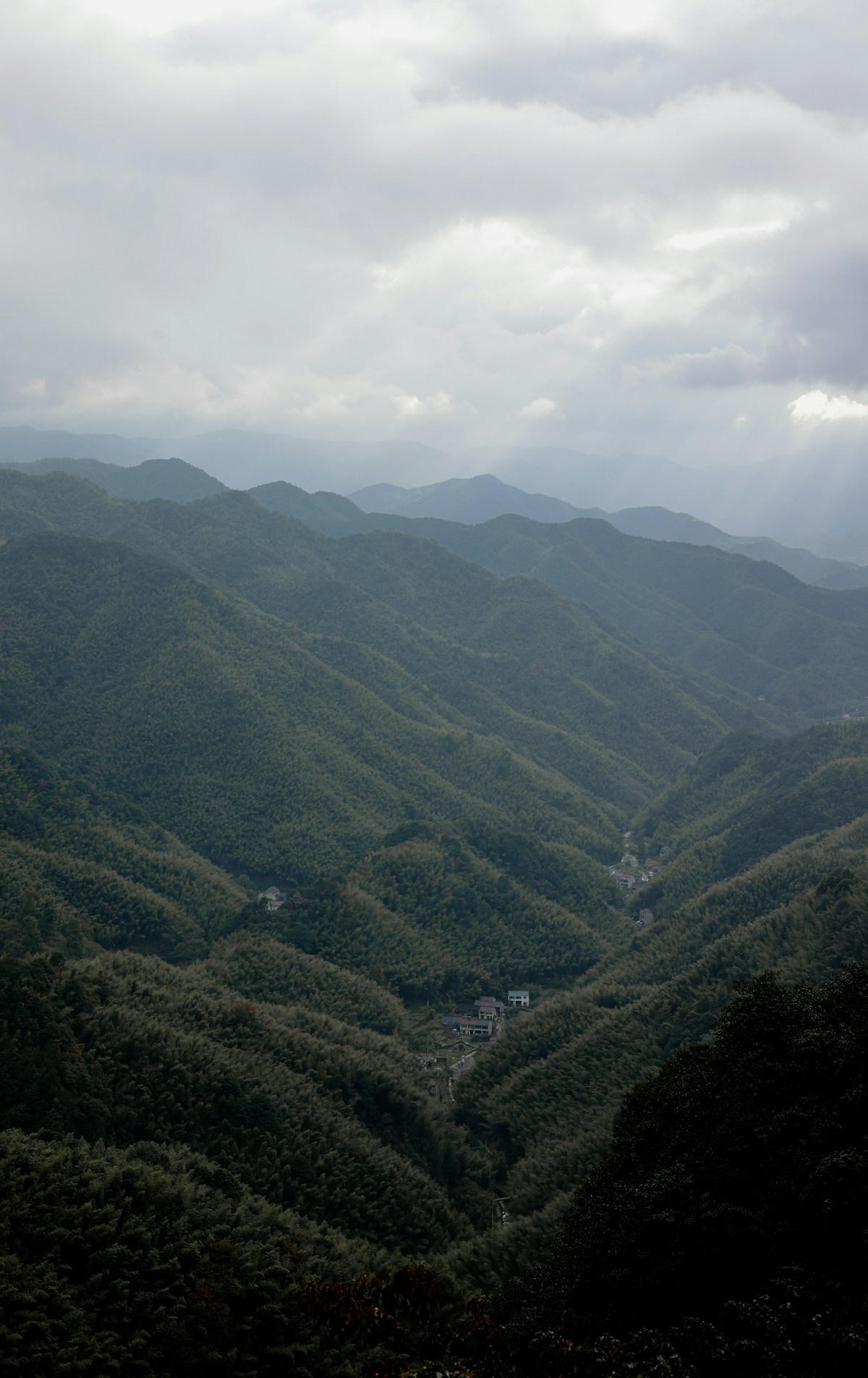
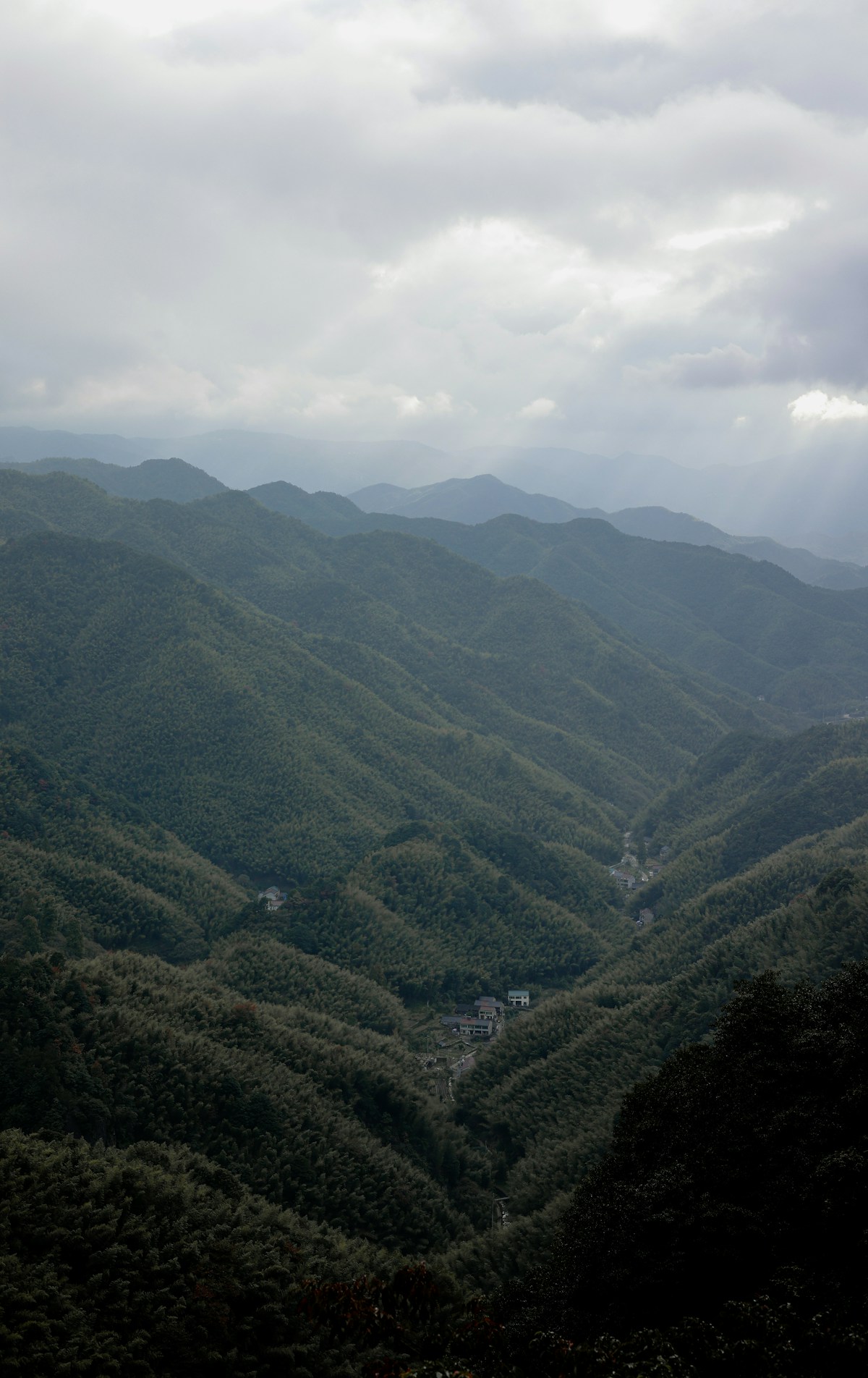
Mountain landscape evoking the terrain of China’s wine regions. Photo by Li Zhang on Unsplash
Beyond Ningxia: A Country of Contrasts
While Ningxia commands the most international attention, China’s viticultural map is far more diverse. Xinjiang, in the far northwest, holds the country’s largest vineyard area by a considerable margin, though much of its production is table grapes or raisin stock; its hot, dry climate and long sunshine hours do, however, yield increasingly credible wine grapes.5 Shandong province, centered on the coastal city of Yantai, remains China’s oldest modern wine region — the Zhang Bishi-founded Changyu Pioneer Wine Company established cellars there in 1892, making it one of Asia’s earliest commercial wineries.6 Hebei, near Beijing, benefits from proximity to the capital’s enormous consumer market and growing wine tourism. And Yunnan, with its extraordinary altitudinal range along the Mekong and Yangtze river valleys, offers some of the most unique terroir on earth — it is here, not in Ningxia, that LVMH chose to site Ao Yun. On the varietal front, Cabernet Sauvignon dominates plantings nationwide, but Marselan — a French cross of Cabernet Sauvignon and Grenache originally bred in 1961 — has proven remarkably well-suited to Chinese conditions and is now among the country’s most exciting grapes. Producers also work with what was long called Cabernet Gernischt, which DNA analysis confirmed in 2012 to be Carménère, the “lost Bordeaux variety” more famously associated with Chile.7 Smaller plantings of Chardonnay and Riesling round out the picture, particularly at higher elevations where cooler nighttime temperatures preserve acidity.

China’s principal wine regions. Map by PowerfulThirst editorial.
“The vine burial alone costs more per hectare than most New World regions spend on their entire growing season. And yet they persist — because the fruit that survives is extraordinary.”
The Hard Truths
For all its momentum, China’s wine industry confronts structural challenges that temper easy optimism. The extreme continental climate means vintage variation is not a nuance but a fundamental risk — late frosts, hailstorms, and monsoon-season rains can devastate yields in ways that more temperate regions rarely experience. The winter vine burial, while culturally iconic, is a brute-force agricultural practice that relies on seasonal migrant labor whose costs rise year over year; mechanization has proven difficult given the varied terrain and trellis systems in use.8 Perhaps more fundamentally, China lacks the multigenerational winemaking tradition that underpins quality in European appellations — institutional knowledge is being built in real time, often by winemakers trained in Bordeaux, Adelaide, or Davis who must then adapt their education to radically different conditions. On the commercial front, domestic producers face fierce competition from imported wines, particularly from France, Australia (following the 2024 lifting of punitive tariffs), Chile, and Spain, which often reach Chinese shelves at price points that undercut local production. Convincing Chinese consumers that domestic wines merit a premium remains an ongoing battle, though one that recent competition results are slowly winning.
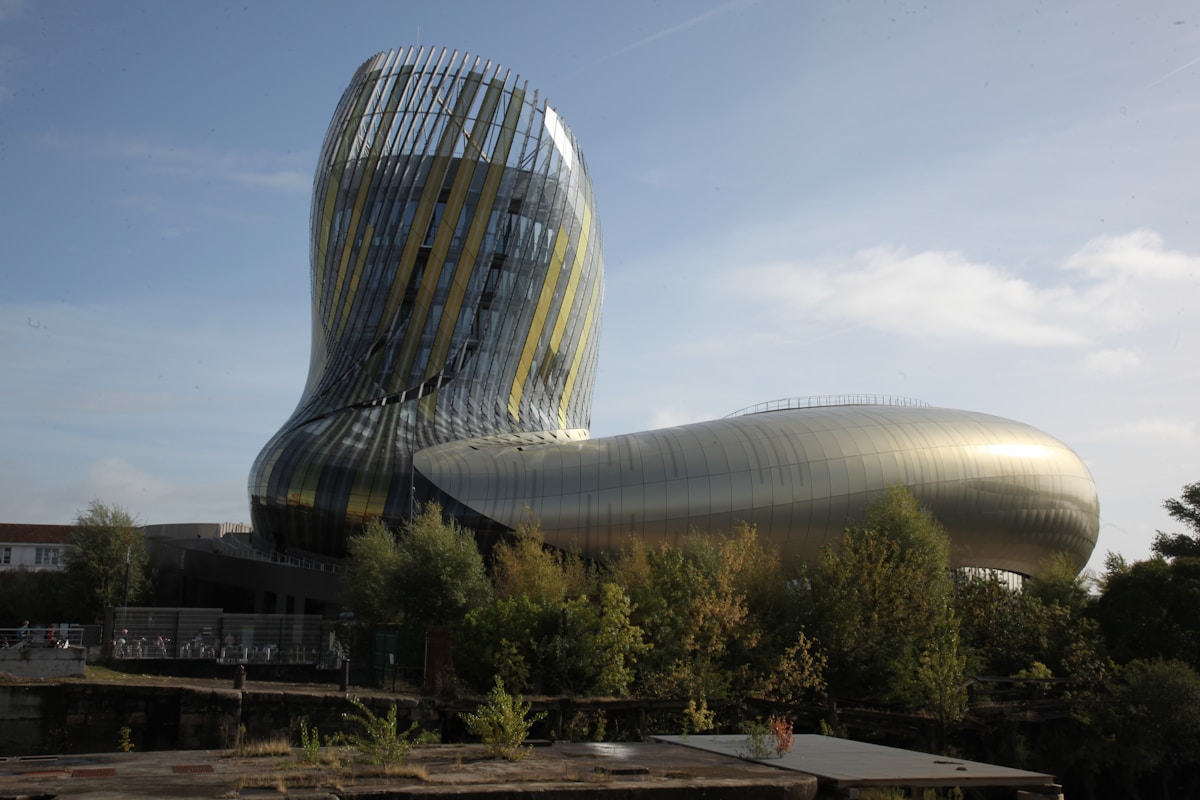
La Cité du Vin, a modern wine museum representing contemporary wine architecture. Photo by Aureli Serrat on Unsplash
The Road Ahead
What makes China’s wine story compelling for industry professionals is not where it stands today, but its trajectory. Government investment — at both national and provincial levels — has been enormous: Ningxia alone has received billions of yuan in infrastructure funding for roads, irrigation, research facilities, and wine tourism development.9 Quality improvement has been measurable and consistent, with Chinese wines now regularly appearing in international competition shortlists and earning scores from major critics that would have seemed implausible a decade ago. The 2023 Ningxia classification system — modeled loosely on Bordeaux’s hierarchy — introduced five tiers of estate ranking, lending institutional structure to what had been a somewhat chaotic landscape. For importers, sommeliers, and buyers, the practical implication is clear: Chinese wine is no longer a curiosity to be sampled once and forgotten. It is an emerging category with distinct regional identity, ambitious producers, and — crucially — the economic and political backing to sustain long-term growth. The dragon, it seems, has been well and truly uncorked.
Notes & Sources
Ningxia Hui Autonomous Region Bureau of Grape Industry Development, “Ningxia Wine Industry Overview,” 2024 annual report. See also Li, H. et al., “Terroir Characterization of Ningxia’s Eastern Helan Mountain Winegrowing Region,” OENO One, Vol. 57, No. 2 (2023). ↩︎
Robinson, J. & Harding, J., The Oxford Companion to Wine, 5th ed. (Oxford University Press, 2023), entry on “China.” ↩︎
“Helan Qingxue Jia Bei Lan 2009 wins International Trophy,” Decanter, September 2011. ↩︎
LVMH, “Ao Yun: A Wine Born at Altitude,” Estates & Wines division profile, 2024. Vineyards located in Adong village, Deqin County, Yunnan Province, at 2,200–2,600m elevation. ↩︎
OIV (International Organisation of Vine and Wine), State of the World Vine and Wine Sector in 2023 (April 2024), pp. 12–14. ↩︎
Changyu Pioneer Wine Company corporate history. Zhang Bishi (Zhang Zhendong) established the winery in 1892 in Yantai, Shandong Province, with the support of Qing Dynasty officials. ↩︎
Li, Demei et al., “Identification of Chinese ‘Cabernet Gernischt’ as Carménère by DNA Typing,” presented at OIV Congress 2012. See also Decanter, “China’s mystery grape unmasked,” January 2012. ↩︎
Xu, W. et al., “Economic Analysis of Winter Vine Burial Practices in Northern China,” Journal of Wine Economics, Vol. 18, No. 3 (2023), pp. 245–261. ↩︎
“Ningxia aims to build world-class wine region,” Xinhua News Agency, June 2023. Provincial government targets 100,000 hectares under vine and annual output value of 200 billion yuan by 2035. ↩︎