Port is the most abused category in the US market. It’s treated like a closet find rather than a living wine program. Every bar that keeps a dusty bottle of Tawny behind the speed rack is leaving money on the table. This is one of the world’s oldest demarcated wine regions, it produces multiple distinct styles, and the unfortified Douro DOC has become one of Europe’s most exciting table wine stories. The gap between what it deserves and how it’s positioned is exactly where the opportunity lives.
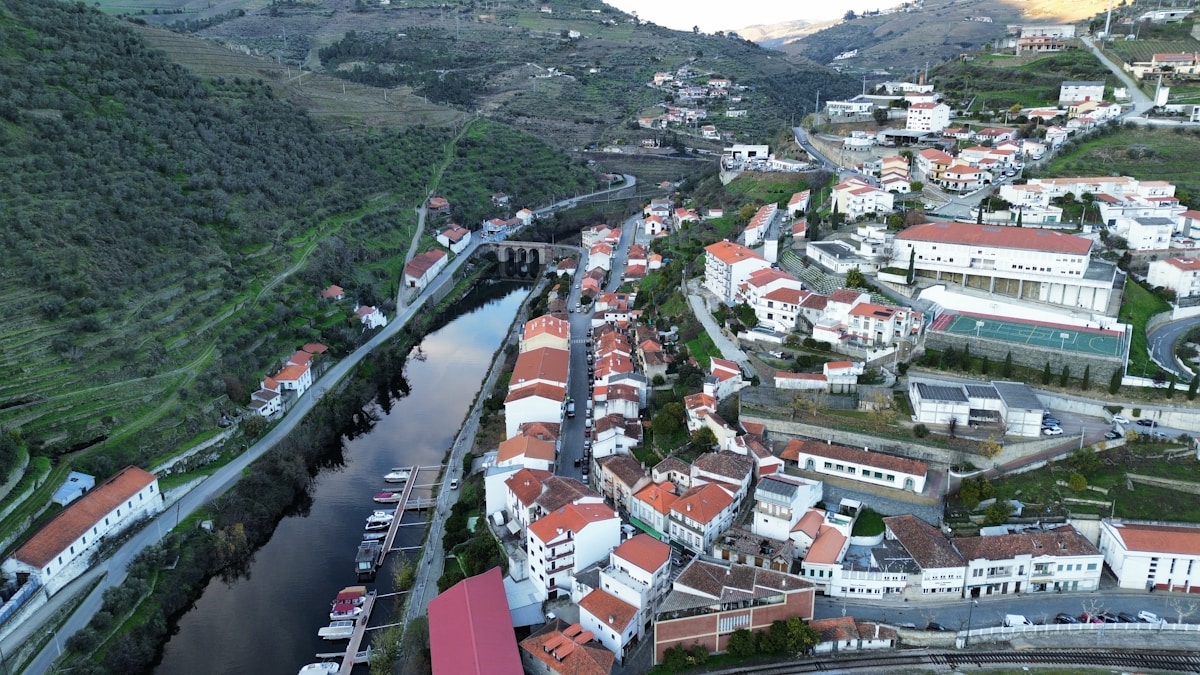
Aerial view of a town along the Douro River, with terraced vineyard hillsides rising from the water, Portugal. Photo by Steve Matthews on Unsplash
Long before Bordeaux codified its 1855 classification and more than a century before the establishment of Italy’s DOC system, the Douro Valley had already drawn a line in the schist. In 1756, the Marquis of Pombal created the Companhia Geral da Agricultura das Vinhas do Alto Douro, effectively establishing the world’s first legally demarcated and regulated wine region.1 That act was born not of scholarly ambition but of commercial necessity: British merchants had driven demand for Port to such heights that fraud and adulteration threatened the entire trade. Pombal’s response was to map the vineyards, classify them by quality, and set legally enforceable boundaries — a framework so prescient that its core logic still underpins the IVDP’s modern benefício system, which allocates Port production rights based on a vineyard scoring matrix of twelve factors including altitude, yield, soil type, and vine age.2 For today’s wine professional, the Douro represents something more than heritage: it is a living case study in how regulation, terroir, and market forces interact across centuries.
Three Sub-Regions, Three Worlds
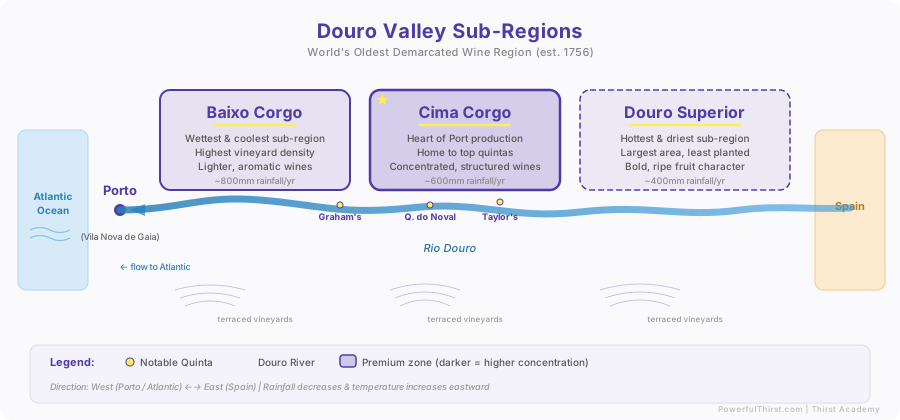
The three sub-regions of the Douro Valley. Map by PowerfulThirst editorial.
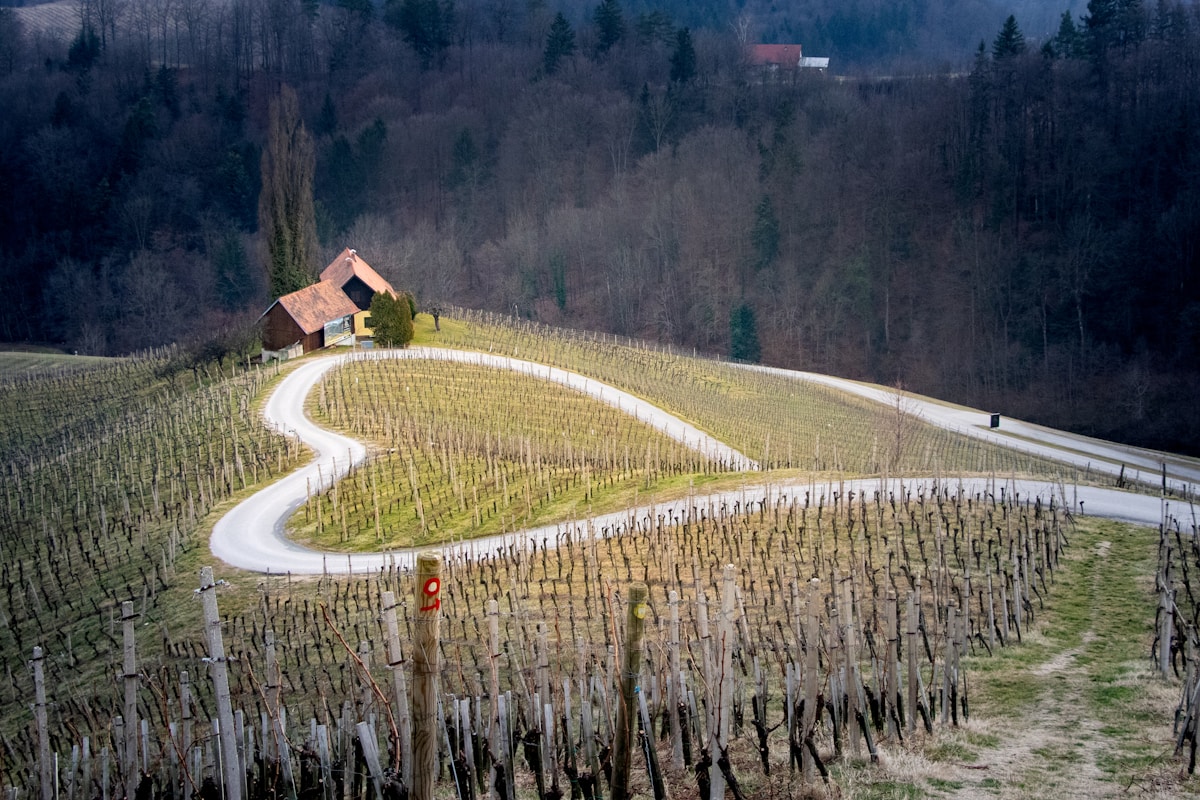
The Douro is not a monolith. Its 250,000 hectares spread across three distinct sub-regions that together trace the Douro River from its mouth at Porto deep into the Iberian interior. Baixo Corgo, the westernmost and most maritime-influenced zone, receives roughly 800mm of annual rainfall and carries the highest vineyard density; its wines tend toward freshness and aromatic lift, and the region supplies much of the fruit for standard Ruby and Tawny ports. Moving upstream, Cima Corgo is the acknowledged heart of premium Port production. Annual precipitation drops to around 600mm, summers are hotter and longer, and the schist soils fracture vertically, forcing vine roots deep into the rock in search of moisture — a stress mechanism that produces intensely concentrated, structured fruit.3 This is the home of legendary quintas: Noval, Vargellas (Taylor’s), Malvedos (Graham’s), and Bomfim (Dow’s) all sit within its boundaries. Finally, Douro Superior, which stretches toward the Spanish frontier, is the hottest and driest zone at approximately 400mm of rainfall. It is by far the largest sub-region by area yet paradoxically the least planted, in part because its semi-arid conditions long made viticulture prohibitively difficult. However, modern irrigation (where permitted) and a growing appetite for bold, ripe unfortified reds have brought fresh investment and attention to this frontier territory.4
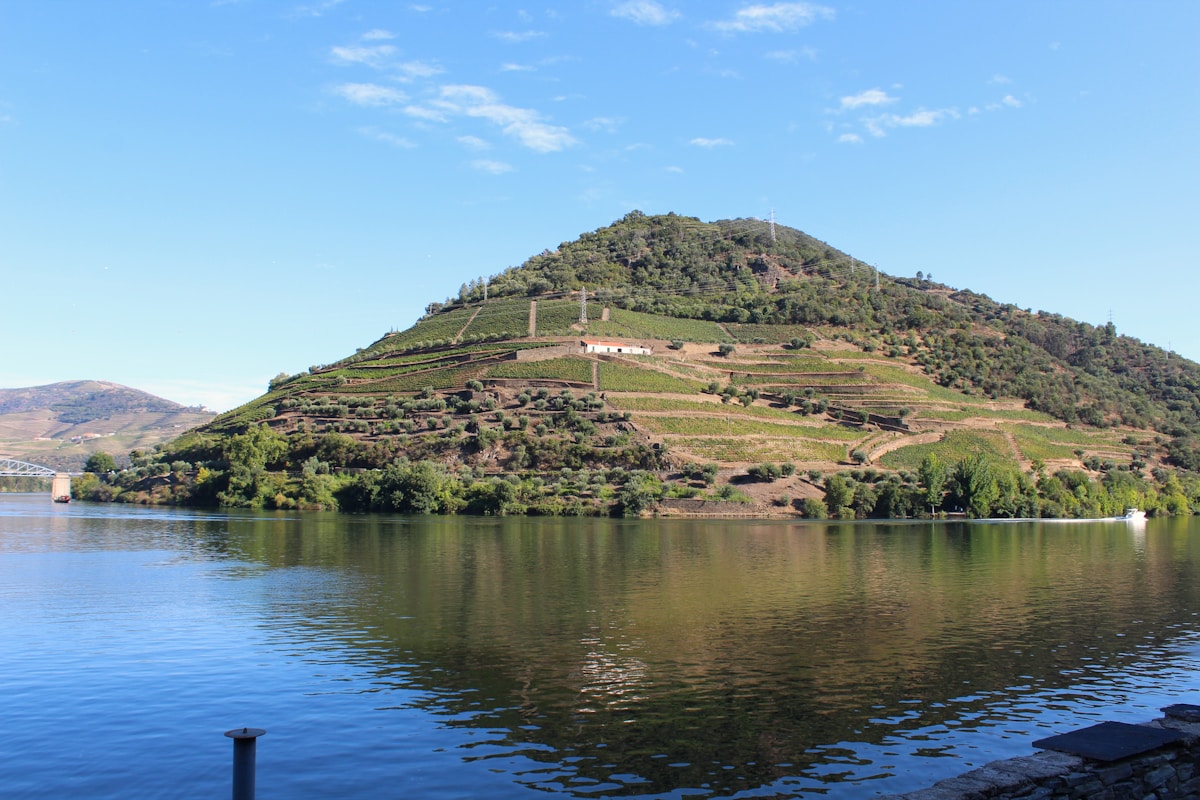
Terraced vineyard hillside reflected in the Douro River near Pinhão, Portugal. Photo by Rui Alves on Unsplash
A Treasury of Indigenous Varieties
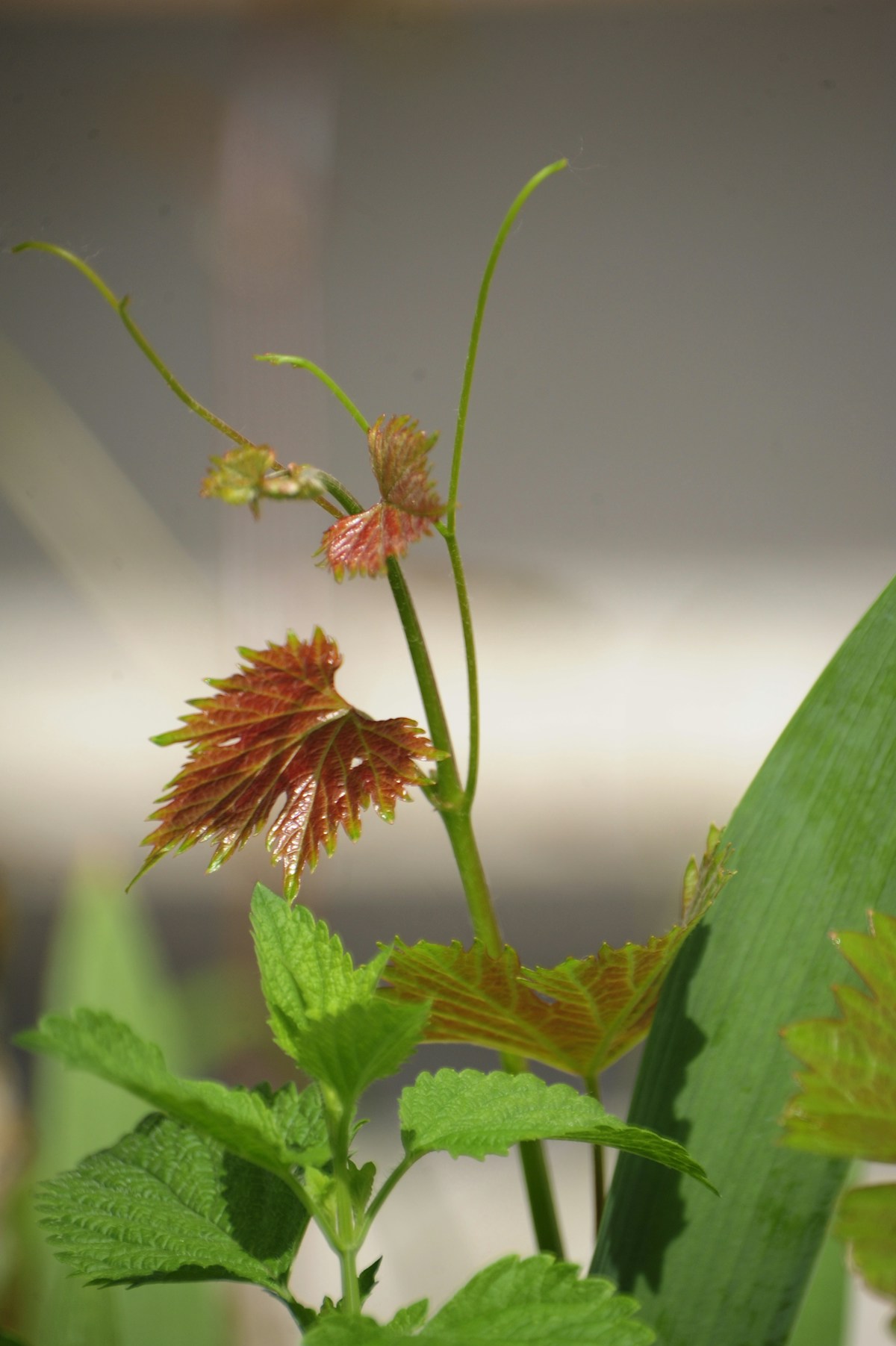
If Burgundy is a monument to mono-varietal expression, the Douro is a cathedral of the field blend. Traditionally, dozens of grape varieties were planted together in old mixed plots (vinhas velhas), and winemakers learned their character empirically rather than variographically. Modern DNA profiling and systematic trial work have since identified the so-called “Douro Five” — the varieties that, singly or in combination, define the region’s finest wines. Touriga Nacional, compact-clustered and phenomenally concentrated, delivers the aromatic intensity (violets, dark cassis, wild herbs) and tannic backbone that anchors both Vintage Ports and top Douro DOC reds. Touriga Franca, the most widely planted of the five, provides floral perfume and a supple mid-palate that softens blends without diluting them. Tinta Roriz — known as Tempranillo across the border in Spain — contributes bright red-fruit lift and structural acidity, a vital counterpoint in the Douro’s warm climate. Tinta Barroca, generous and early-ripening, adds volume and approachable fruit sweetness, while Tinto Cão, once nearly extinct and now enjoying a careful revival, brings remarkable finesse, perfume, and aging potential that some producers liken to Pinot Noir in its ethereal best.5 Collectively, these varieties embody a biodiversity advantage that few New World regions can replicate.
The Douro Five — At a Glance
- Touriga Nacional — Small berries, intense color, violets & cassis. The “noble heart” of Port and Douro reds.
- Touriga Franca — Most planted. Floral, supple, blending backbone. Reliable across sub-regions.
- Tinta Roriz (Tempranillo) — Bright acidity, red fruit, structural lift. Thrives in Cima Corgo.
- Tinta Barroca — Early-ripening, generous, fleshy. Adds approachability to blends.
- Tinto Cão — Rare, perfumed, age-worthy finesse. Under revival by quality-focused estates.
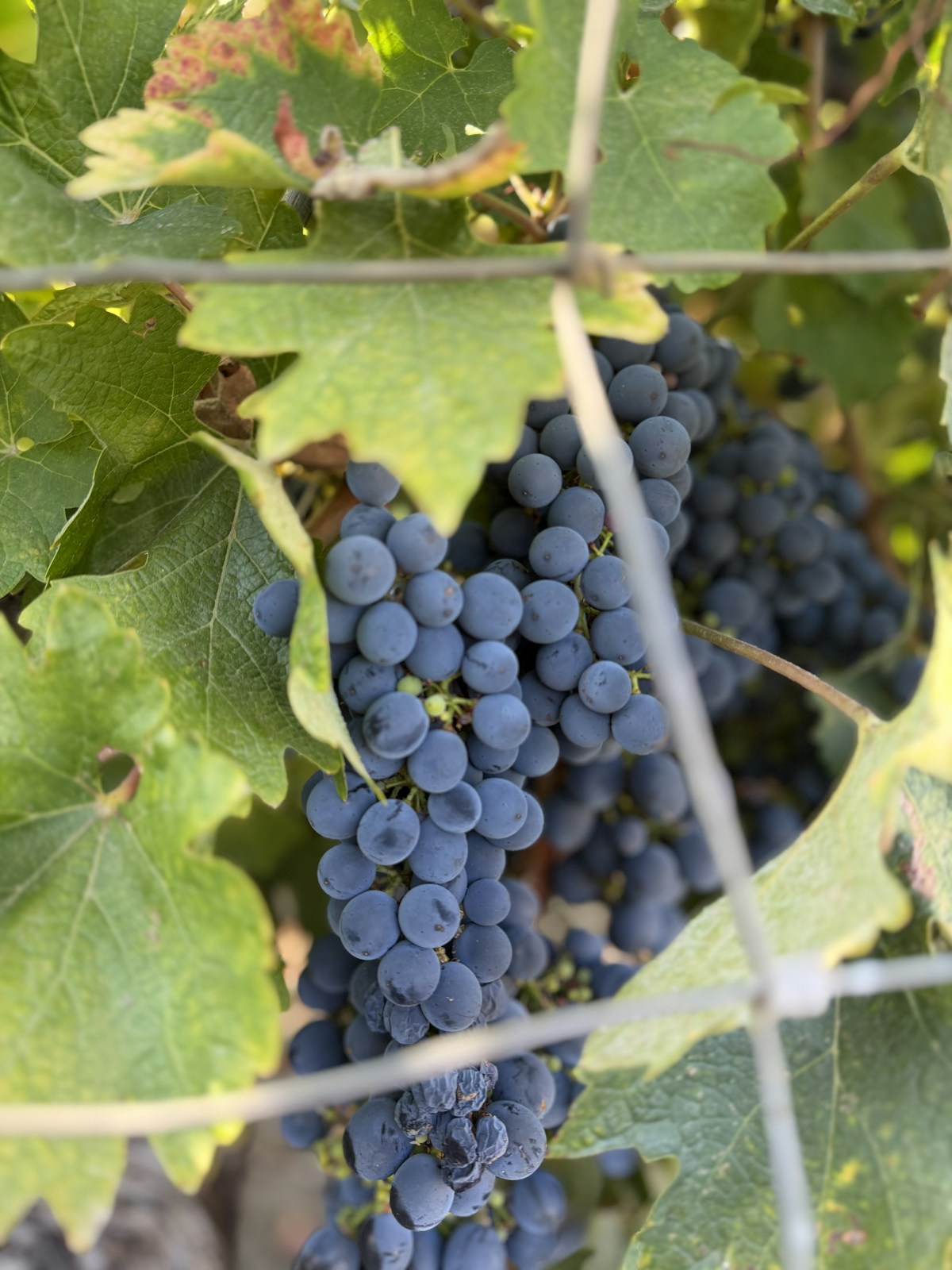
Clusters of ripe dark-skinned grapes on the vine. Photo by Lauren M on Unsplash
A Spectrum of Styles: From Ruby to Rosé
Port is not one wine but a family, and understanding its full stylistic range is essential for any professional advising on fortified categories. The broadest division is between Ruby-style and Tawny-style ports, a distinction rooted in aging vessel and oxidation pathway. Ruby ports (including Reserve Ruby, Late Bottled Vintage, Single Quinta Vintage, and declared-year Vintage Port) age reductively in large vats or bottle, preserving deep fruit purity, firm tannin, and dark color. At the pinnacle, declared Vintage Ports — made only in exceptional years and required to age a minimum of two years in wood followed by extended bottle maturation — can evolve for decades, developing tertiary complexity while retaining a core of youthful power.6 Tawny ports, by contrast, mature oxidatively in small 550-liter pipas, gradually exchanging fruit intensity for the caramel, walnut, dried-apricot, and butterscotch signatures that define the category. The age-indicated Tawnies (10, 20, 30, and 40-year) are blends calibrated to evoke the character of wine at those average ages, while Colheita ports are single-harvest Tawnies aged a minimum of seven years in cask, offering a dated snapshot of oxidative evolution. The category has further expanded with White Port (ranging from dry aperitif styles to lusciously sweet) and the more recent Rosé Port, introduced by Croft in 2008, which targets a younger consumer with its fresh, chilled-serve positioning.7
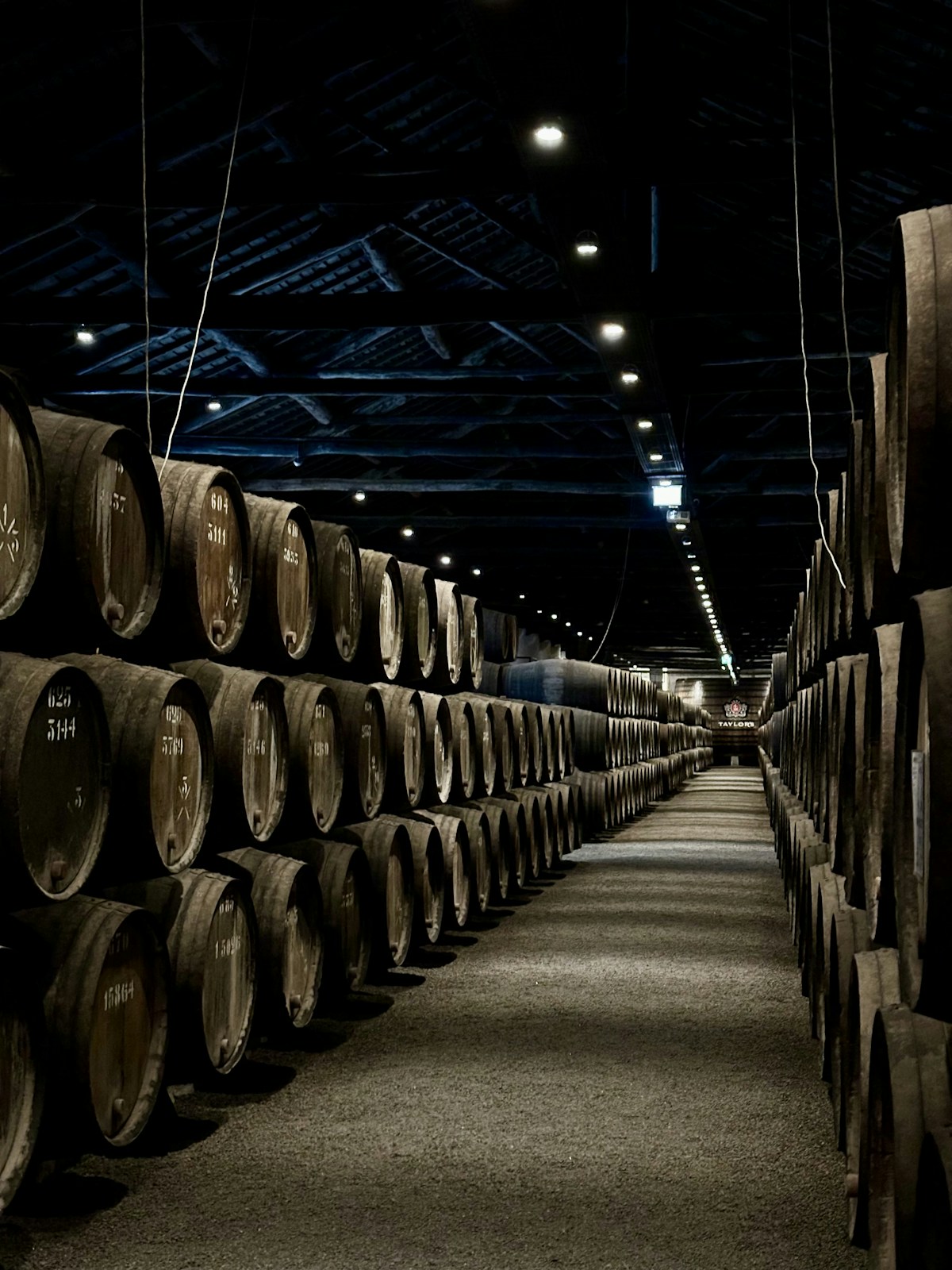
Rows of Port wine barrels aging in a lodge in Vila Nova de Gaia, Portugal. Photo by John Cameron on Unsplash
“The Douro is a place where tradition is not a museum piece but a living argument — every harvest tests whether the old methods still hold, and every bottle answers.”
Great Quintas and the New Douro
The reputation of Port has always been anchored by its great estates. Quinta do Noval stands apart for its Nacional bottling, sourced from a tiny 2.5-hectare plot of ungrafted, pre-phylloxera vines that produces one of the rarest and most sought-after wines on earth.8 Taylor’s (Quinta de Vargellas), Graham’s (Quinta dos Malvedos), Dow’s (Quinta do Bomfim), and Fonseca (Quinta do Panascal) form the bedrock of the British shipper tradition, each maintaining house styles that stretch back centuries. Meanwhile, Niepoort, under the iconoclastic direction of Dirk Niepoort, has become a bridge between old and new: producing rigorous traditional Ports alongside some of the Douro’s most compelling unfortified wines, including the acclaimed Batuta and Charme reds. The trend toward single-quinta Port declarations — where individual estates bottle and market their own wine in non-declared years — has democratized quality and given consumers a more terroir-specific lens into the region.9 In the winery, the tension between lagares (shallow stone treading tanks, still regarded as the gold standard for top cuvees) and autovinification (pressure-driven extraction tanks developed in the mid-20th century) continues to generate debate, though a growing number of producers are returning to foot-treading for their premium lots, sometimes in temperature-controlled granite or stainless-steel lagares that marry tradition with precision.
Beyond Port: The Rise of Douro DOC
Perhaps the most consequential shift in the modern Douro is the ascent of its unfortified table wines, marketed under the Douro DOC designation. The pioneer here is undeniably Barca Velha, created in 1952 by Fernando Nicolau de Almeida for Casa Ferreirinha (Sogrape), and produced only in years the winemaker deems exceptional — just nineteen vintages in seventy-plus years.10 Barca Velha proved that the Douro’s indigenous varieties, freed from the interruption of spirit addition, could produce dry reds of profound depth and longevity. Today, a vibrant ecosystem of Douro DOC producers — from Niepoort and Quinta do Crasto to Wine & Soul and Quinta do Vallado — is exploring the full expressive range of the region’s terroir, including high-altitude whites, single-varietal Touriga Nacional bottlings, and old-vine field blends from centenarian vinhas velhas plots. Organic and sustainable viticulture is accelerating across the valley: the steep terraces and low-vigor schist soils lend themselves to low-intervention farming, and several estates have achieved organic or biodynamic certification. Climate change looms as both challenge and catalyst; rising temperatures push viticulture toward higher altitudes and the cooler Baixo Corgo, while simultaneously making the once-marginal Douro Superior more consistently viable. For the wine professional watching global portfolio trends, the Douro is no longer just a fortified-wine story — it is one of Europe’s most dynamic and complete red-wine regions, with an indigenous grape arsenal and terroir diversity that deserve attention well beyond the Port glass.
Notes & References
Liddell, A. & Price, J. Port Wine Quintas of the Douro. Sotheby’s Publications, 1992. The 1756 demarcation predates Chianti (1716 Cosimo III edict was regional, not regulatory in the modern sense) and is widely regarded as the first appellation system with enforcement mechanisms. ↩︎
Instituto dos Vinhos do Douro e Porto (IVDP). “O Sistema de Benefício.” The benefício scoring system evaluates vineyards on a 12-point matrix; only plots exceeding a minimum score may produce Port, with quotas set annually. ↩︎
Magalhães, N. Tratado de Viticultura: A Videira, a Vinha e o Terroir. Publicações Chaves Ferreira, 2008. Schist’s vertical fracturing allows roots to penetrate 10–15 meters in extreme cases. ↩︎
Mayson, R. Port and the Douro. 4th ed., Infinite Ideas, 2016. Douro Superior’s planted area has roughly doubled since 2000, driven by investment in modern viticulture and irrigation infrastructure. ↩︎
Robinson, J., Harding, J., & Vouillamoz, J. Wine Grapes. Allen Lane, 2012. Entries on Touriga Nacional, Touriga Franca, Tinta Roriz, Tinta Barroca, and Tinto Cão. ↩︎
IVDP regulations stipulate that declared Vintage Port must be approved by a tasting panel and aged a minimum of two years in cask before bottling. Declarations are made by individual shippers and are not universal across the trade. ↩︎
Robertson, G. Port: An Essential Guide to the Classic Drink. Grub Street, 2019. Croft Pink, launched 2008, was the first commercial Rosé Port. ↩︎
Symington, P. “Quinta do Noval Nacional: Ungrafted Vines and the Myth of Terroir.” The World of Fine Wine, Issue 62, 2019. The Nacional plot has survived phylloxera due to its sandy soil pockets within the schist. ↩︎
Mayson, R. The Wines and Vineyards of Portugal. Mitchell Beazley, 2003. Single-quinta declarations began gaining prominence in the 1980s, particularly with Taylor’s Vargellas and Graham’s Malvedos. ↩︎
Ferreira / Sogrape archives. Barca Velha declared vintages through 2011: 1952, 1953, 1954, 1957, 1964, 1965, 1966, 1978, 1981, 1982, 1983, 1985, 1991, 1995, 1999, 2000, 2001, 2004, 2008, 2011. The 2011 was released in 2021. ↩︎