Ask a bar owner about Portuguese wine beyond Port and the answer is usually: “Is that the green wine?” Yes. And also no. Portugal has 250-plus indigenous grape varieties — more per square mile than anywhere else in Europe — and the US market is barely scratching the surface. That’s not a gap in supply. That’s a gap in who’s telling the story.
For decades, the global wine trade’s understanding of Portugal began and ended at the Douro Valley: Port wine, a handful of increasingly respected dry Douro reds, and perhaps a vague awareness that something fizzy existed farther north. That narrow lens is no longer defensible. Portugal is home to more than 250 indigenous grape varieties — a genetic treasury unmatched by any comparably sized nation — and four of its most compelling regions are producing wines that deserve permanent shelf space, by-the-glass programmes, and serious critical reassessment.1 The regions in question — Alentejo, Dão, Vinho Verde, and Madeira — span virtually every style from bone-dry, saline whites to fortified wines of near-infinite longevity. Together, they tell the story of a country whose viticultural ambition now matches its viticultural heritage.
Alentejo: The New World Inside Old Europe
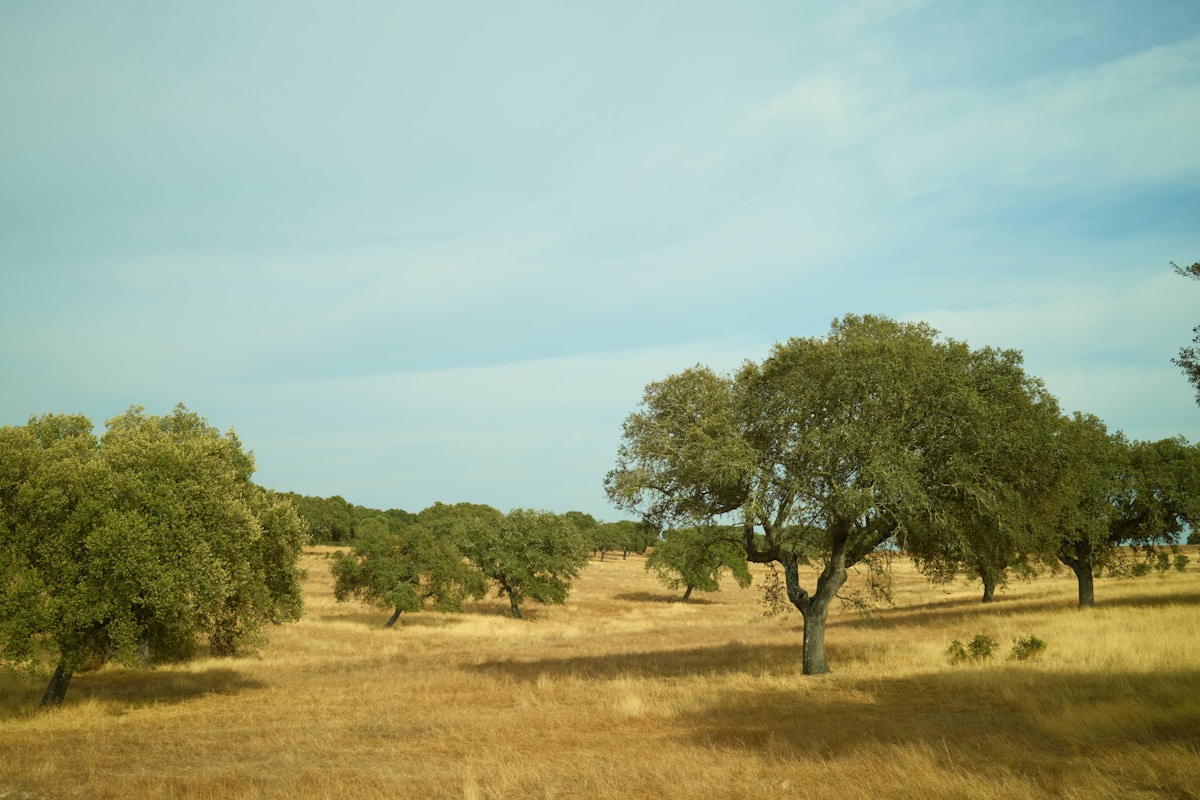
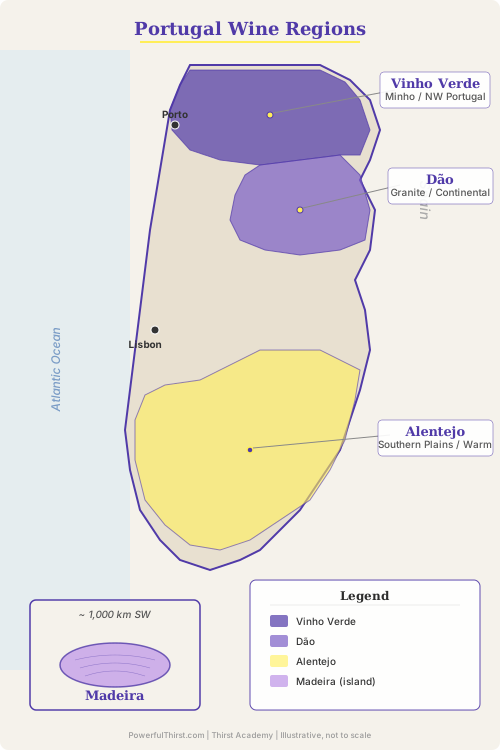
Alentejo occupies roughly a third of Portugal’s landmass, a vast swath of cork oak forests, rolling golden plains, and summer temperatures that routinely breach 40°C. For centuries, the region was synonymous with co-operative bulk wine. That era is emphatically over. A generation of investment — led by estates such as Herdade do Esporão, Herdade dos Grous, and the prolific João Portugal Ramos — has transformed Alentejo into one of Portugal’s most export-oriented, quality-driven appellations.2 The whites built on Antão Vaz and Arinto deliver the kind of ripe, textured drinkability that sommeliers can hand-sell without a geography lesson, while the reds — anchored by Trincadeira and, crucially, Alicante Bouschet, which finds perhaps its finest global expression here — offer concentration and warmth balanced by increasingly sophisticated use of clay talha fermentation and high-altitude vineyard sites. For buyers seeking Mediterranean generosity at price points that Priorat and Barossa can no longer match, Alentejo is the answer that has been hiding in plain sight.
Dão: Burgundy’s Iberian Counterpart
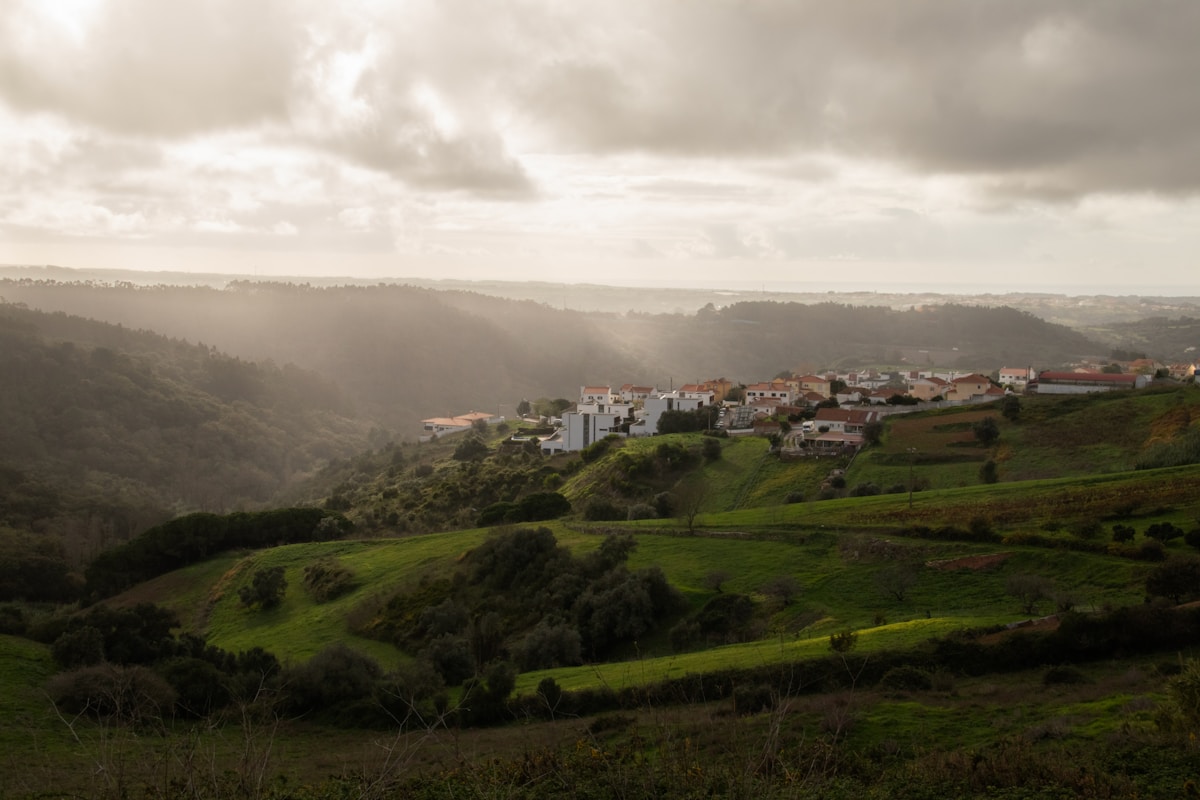
If Alentejo is Portugal’s warm-climate success story, Dão is its cool-climate conscience. Ringed by mountain ranges that shield its vineyards from Atlantic rain and coastal influence, Dão sits on decomposed granite at elevations of 400 to 800 metres, producing wines of a structural elegance that Portugal is not always credited with. The comparison to Burgundy is not casual: Touriga Nacional, the region’s signature red grape, yields wines here of remarkable perfume, medium body, and fine-grained tannin — a stark contrast to the muscular Touriga Nacional of the Douro or Dão’s own co-operative past, when mandatory central processing suppressed terroir expression for decades.3 That dark chapter ended in 1990, and the intervening years have seen producers like Álvaro Castro at Quinta da Pellada and the technically assured DFJ Vinhos demonstrate what granite-grown Touriga Nacional and the exceptional white grape Encruzado can achieve when handled with ambition. Encruzado, in particular, deserves attention: capable of lees-ageing complexity on par with fine white Burgundy, it remains scandalously undervalued on the international market.
Vinho Verde: Far More Than a Patio Pour
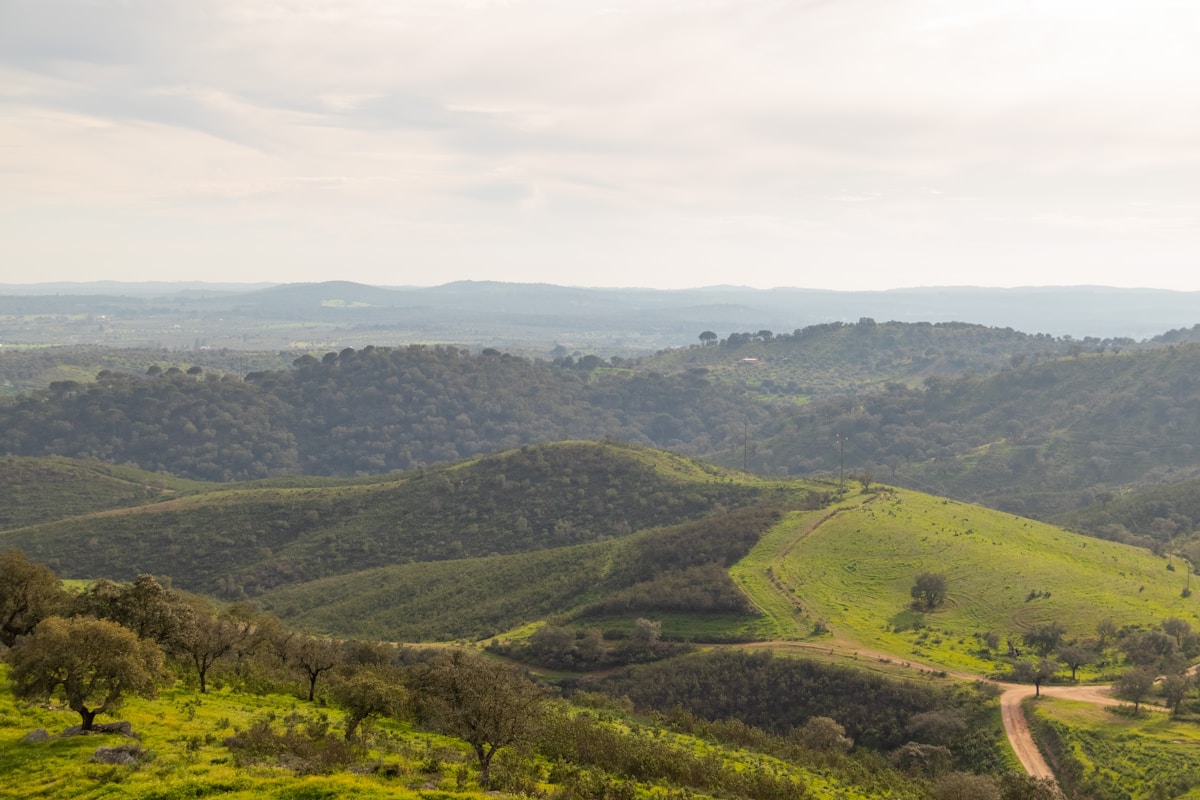
Vinho Verde remains, for many international buyers, a category rather than a region: cheap, slightly spritzy, vaguely refreshing, and largely interchangeable. That perception is both outdated and commercially damaging to the producers who are doing genuinely distinguished work. The DOC Vinho Verde encompasses nine sub-regions spanning dramatically different terroirs, and understanding those sub-regions is now essential. The most consequential is Monção e Melgaço, in the far north along the Spanish border, where Alvarinho (known as Albariño across the River Minho) achieves a weight, mineral density, and ageing capacity that puts the best bottlings in conversation with top-tier Chablis or Rías Baixas.4 Anselmo Mendes, widely regarded as the godfather of premium Vinho Verde, and Soalheiro, whose single-vineyard Alvarinhos have accumulated critical praise across European markets, are the standard-bearers. Meanwhile, the Loureiro grape — aromatic, floral, lighter-bodied — offers a compelling by-the-glass proposition in its own right. The industry’s challenge is not quality; it is persuading buyers to look past the region’s legacy price point and recognise that Vinho Verde’s top tier competes on merit, not on discount.
“Portugal’s 250-plus indigenous varieties represent perhaps the single greatest untapped reservoir of genetic diversity in the European wine world — a strategic asset that no amount of Cabernet planting can replicate.”
Madeira: The Indestructible Wine
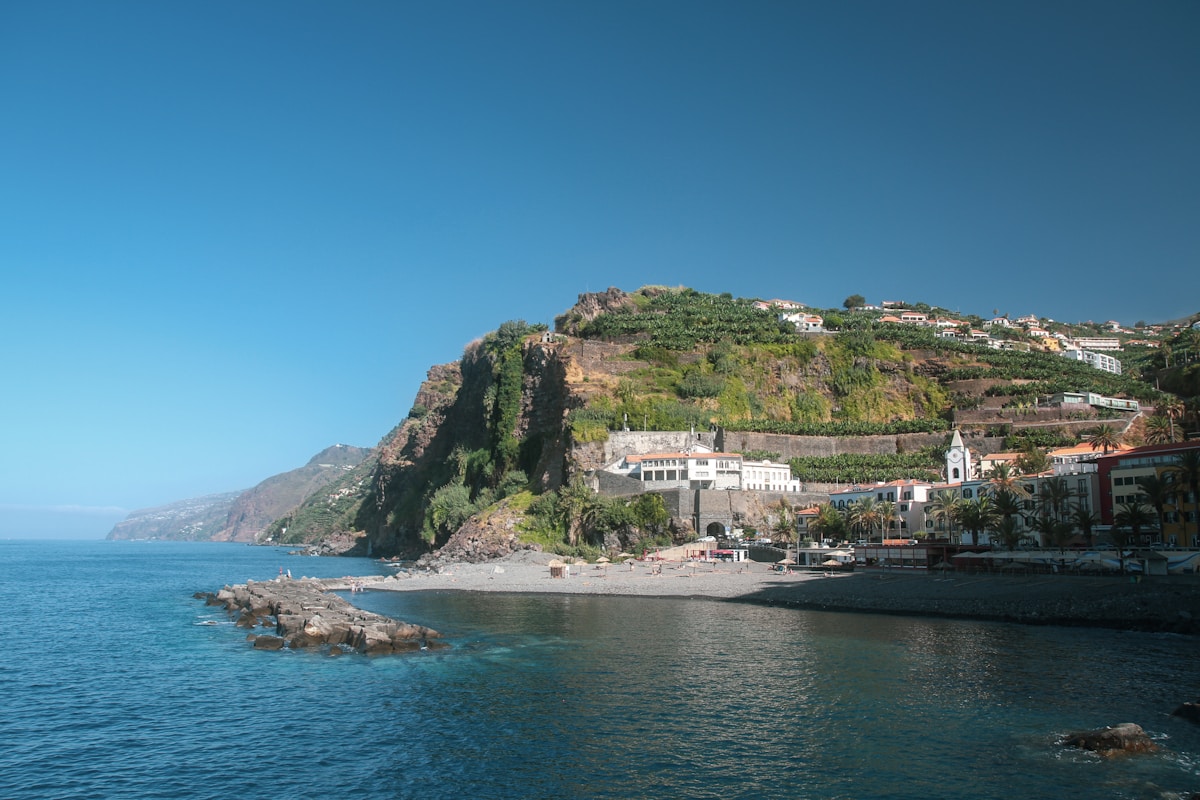
No discussion of Portuguese wine is complete without Madeira, yet the category occupies an oddly marginal position in contemporary wine culture — more likely to be referenced in culinary contexts than poured at the table. This is a disservice to what may be the world’s most indestructible wine. Produced on a volcanic Atlantic island 1,000 kilometres from Lisbon, Madeira undergoes a deliberate heating process — either the industrial estufagem method or the superior canteiro technique, in which barrels rest for years in sun-warmed lofts — that effectively renders the wine impervious to oxidation.5 The four noble varieties form a spectrum of sweetness and intensity: Sercial (dry, nervy, razor-sharp acidity), Verdelho (off-dry, smoky, complex), Boal, also known as Bual (rich, caramelised, medium-sweet), and Malmsey, from the Malvasia grape (luscious, treacle-deep, yet always lifted by Madeira’s hallmark acidity). Houses such as Blandy’s and Henriques & Henriques have maintained standards through centuries of shifting markets. For the wine professional, Madeira represents a uniquely compelling proposition: a wine that improves over decades in bottle, survives open for months, and pairs with a wider range of food than almost any other fortified style. Its current undervaluation is, frankly, an opportunity.6
The Indigenous Advantage
What unites these four regions — and indeed all of Portuguese winemaking — is an indigenous grape patrimony of staggering depth. With more than 250 native varieties officially catalogued, Portugal possesses a viticultural gene bank that no other European nation of comparable size can rival.7 In an era when consumers and trade professionals alike are fatigued by the homogeneity of international varieties, this represents a genuine strategic asset. Antão Vaz, Encruzado, Alvarinho, Loureiro, Touriga Nacional, Trincadeira, Sercial, Verdelho — these are not obscure footnotes but grapes capable of world-class expression, each rooted in a specific place and climate. The Portuguese wine industry’s task now is one of communication: articulating terroir narratives with the same rigour that Burgundy and Barolo have long employed, while leveraging the curiosity-driven purchasing habits of a new generation of buyers. The foundations — the land, the vines, the winemaking talent — have never been stronger. For importers, sommeliers, and retailers willing to invest the time, Portugal beyond Port is not a niche play. It is, increasingly, where the most exciting value and discovery in European wine resides.
Quick Reference: Regions at a Glance
| Region | Climate / Soil | Key Grapes | Benchmark Producers |
|---|---|---|---|
| Alentejo | Hot Mediterranean; schist, granite, clay | Antão Vaz, Arinto, Trincadeira, Alicante Bouschet | Herdade do Esporão, Herdade dos Grous, J. Portugal Ramos |
| Dão | Continental; decomposed granite, 400–800m elevation | Touriga Nacional, Encruzado | Álvaro Castro (Quinta da Pellada), DFJ Vinhos |
| Vinho Verde | Atlantic; granite, high rainfall | Alvarinho, Loureiro | Anselmo Mendes, Soalheiro |
| Madeira | Subtropical volcanic island; basalt terraces | Sercial, Verdelho, Boal (Bual), Malmsey (Malvasia) | Blandy’s, Henriques & Henriques |
Sources & Notes
Wines of Portugal / ViniPortugal, “Indigenous Grape Varieties,” 2024. Portugal’s official viticultural registry lists over 250 authorised native varieties, the highest density per capita of any European wine-producing nation. ↩︎
Robinson, J., Harding, J., and Vouillamoz, J., Wine Grapes (Penguin, 2012). Alicante Bouschet, a teinturier variety largely abandoned in France, has found its most successful modern expression in the Alentejo, where warm nights and clay-limestone soils allow full phenolic ripeness. ↩︎
Mayson, R., The Wines and Vineyards of Portugal (Mitchell Beazley, 2003). Between 1942 and 1990, Portuguese law mandated that Dão grapes be processed at regional co-operatives, stifling individual estate production and terroir differentiation. ↩︎
Comissão de Viticultura da Região dos Vinhos Verdes (CVRVV), “Sub-Regions and Terroir,” 2023. Monção e Melgaço is the warmest and driest sub-region of the DOC, producing Alvarinho of greater body and ageing potential. ↩︎
Liddell, A., Madeira: The Mid-Atlantic Wine (Hurst, 2014). The canteiro method, in which wines age naturally in heated attic lofts (armazéns), can extend over 20 years and produces the most complex and long-lived Madeiras. ↩︎
Broadbent, M., Vintage Wine (Harcourt, 2002). Broadbent famously tasted Madeiras from the 18th century that remained not merely drinkable but vibrant, underscoring the wine’s unparalleled longevity. ↩︎
Instituto da Vinha e do Vinho (IVV), “Catálogo Nacional de Variedades de Videira,” 2024. The catalogue maintains entries for over 250 distinct authorised varieties cultivated across Portugal’s wine regions. ↩︎