
Tequila is one of the most regulated and terroir-driven spirits in the world. For beverage professionals, understanding its production, legal framework, regional character, and classification system is essential to building credible agave programs and advising clients. This guide covers the full scope of what the trade needs to know.
What is Tequila
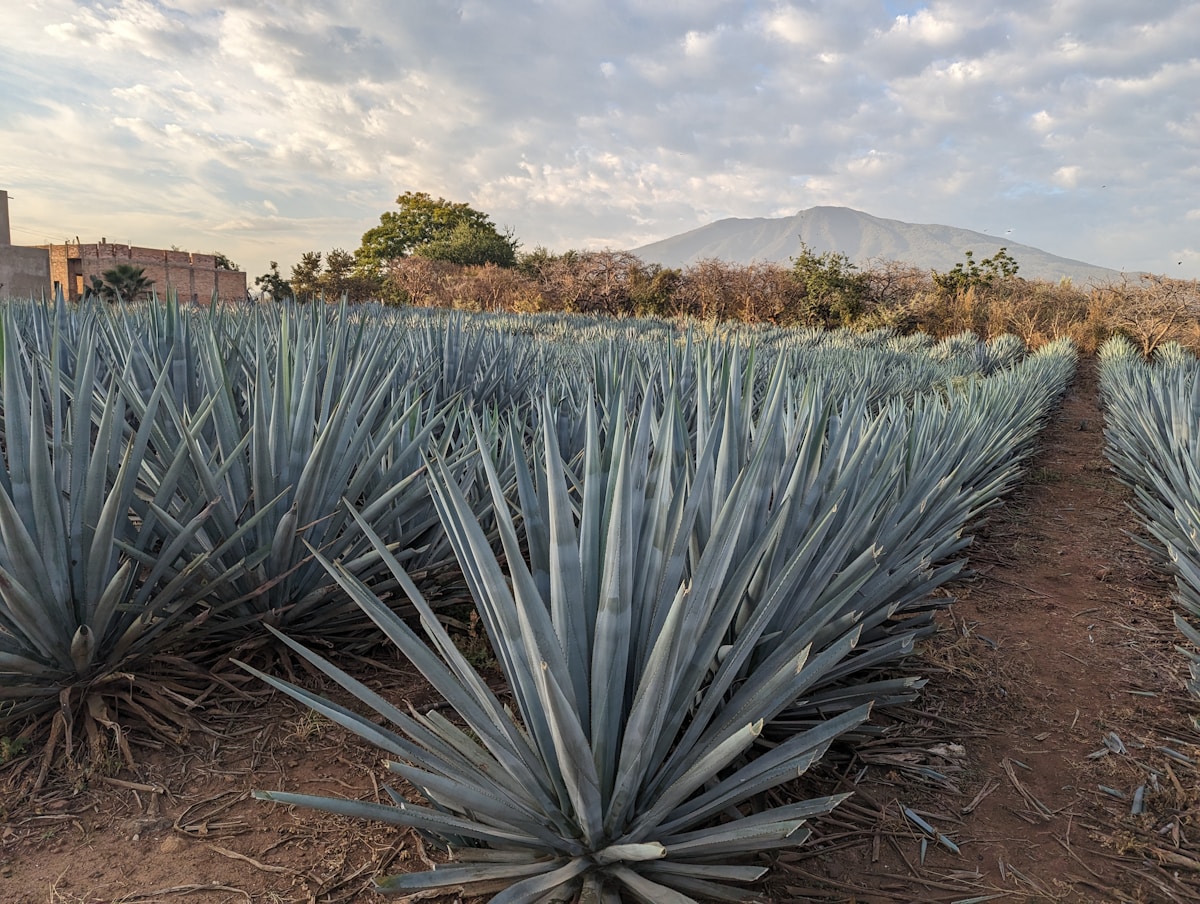
Tequila is a distilled spirit made from the cooked and fermented sugars of the blue Weber agave (Agave tequilana Weber var. azul). It is produced exclusively within a legally designated region of Mexico, primarily in the state of Jalisco, with limited production permitted in parts of Guanajuato, Michoacán, Nayarit, and Tamaulipas.
Legal Framework
Tequila is one of the most tightly regulated spirits on the planet, governed by three interlocking mechanisms:
Denomination of Origin (DOT): Established by the Mexican government in 1974 and recognized internationally under the Lisbon Agreement, the Denomination of Origin restricts the use of the word “tequila” to spirits produced within the designated geographic zone using blue Weber agave grown in that same zone. This is conceptually similar to the appellations governing Champagne or Cognac.
NOM (Norma Oficial Mexicana): The official Mexican standard — specifically NOM-006-SCFI-2012 — defines every aspect of legal tequila production: permitted raw materials, sugar content minimums, distillation requirements, aging classifications, labeling rules, and bottling standards. Every bottle of tequila carries a four-digit NOM number identifying the distillery of production. A single NOM may produce dozens of brands under contract, and tracking NOMs is one of the most practical tools available to trade professionals evaluating provenance.
CRT (Consejo Regulador del Tequila): The CRT is the private, non-profit regulatory body authorized by the Mexican government to verify compliance with the NOM and the Denomination of Origin. It inspects distilleries, certifies production, monitors agave supply, tracks every liter from field to bottle, and audits labeling. The CRT functions as tequila’s equivalent of a combined TTB and appellation enforcement agency.
Together, these three elements mean that tequila has full chain-of-custody traceability from the agave field through distillation, aging, and bottling — a level of regulatory transparency that few spirits categories can match.
History
Pre-Hispanic Roots
Long before distillation arrived in the Americas, the indigenous peoples of central Mexico had a deep relationship with the agave plant. The Aztecs and their predecessors fermented the sap of various agave species to produce pulque, a mildly alcoholic, viscous, milky beverage that held religious and ceremonial significance. Pulque was associated with the deity Mayahuel, the goddess of the maguey (agave), and its consumption was governed by strict social codes. The agave plant itself was a cornerstone of pre-Columbian life — its fibers were used for rope and textiles, its thorns as needles, and its leaves as roofing material.
Spanish Distillation and Early Mezcal
When Spanish conquistadors arrived in the 16th century, they brought copper-pot distillation technology. Faced with dwindling supplies of imported brandy, colonists began distilling the fermented agave mash into what was broadly called mezcal wine (vino de mezcal). The town of Tequila, in what is now Jalisco, became an early center of commercial production due to its volcanic soils, abundant wild and cultivated agave, and proximity to trade routes. By the early 1600s, the colonial governor of Nueva Galicia had begun taxing mezcal production, formalizing it as an industry.
The Founding Families
Jose Cuervo: In 1758, the Spanish Crown granted José Antonio de Cuervo a land concession in the Tequila Valley. His descendant, José María Guadalupe de Cuervo, received the first official license to produce mezcal wine commercially in 1795. The family’s distillery, La Rojeña, has operated continuously since then and is the oldest active tequila distillery in the world. Cuervo played a central role in establishing tequila as a distinct commercial category.
Sauza: Don Cenobio Sauza founded his distillery, La Perseverancia, in 1873. Sauza is widely credited with two contributions critical to the modern industry: he was among the first to identify blue Weber agave as the superior species for tequila production, and he was an early advocate for exporting tequila to the United States. The Sauza family helped push for the legal protections that would eventually become the Denomination of Origin.
The Modern Era
Tequila’s international profile grew steadily through the 20th century, accelerated by Prohibition-era border tourism, the post-WWII cocktail culture, and the Margarita’s rise to ubiquity. The formal Denomination of Origin in 1974 and the NOM standards created a legal infrastructure that professionalized the industry. The 1990s and 2000s saw an explosion of premium and ultra-premium brands, celebrity-backed labels, and a dramatic shift in consumer perception from a shot-and-lime party spirit to a serious sipping category. The introduction of the Extra Añejo classification in 2006 reflected this premiumization trend. Today, tequila is one of the fastest-growing spirits categories globally, with the United States consuming more tequila than Mexico.
Production Process
Harvesting: The Jimador’s Craft
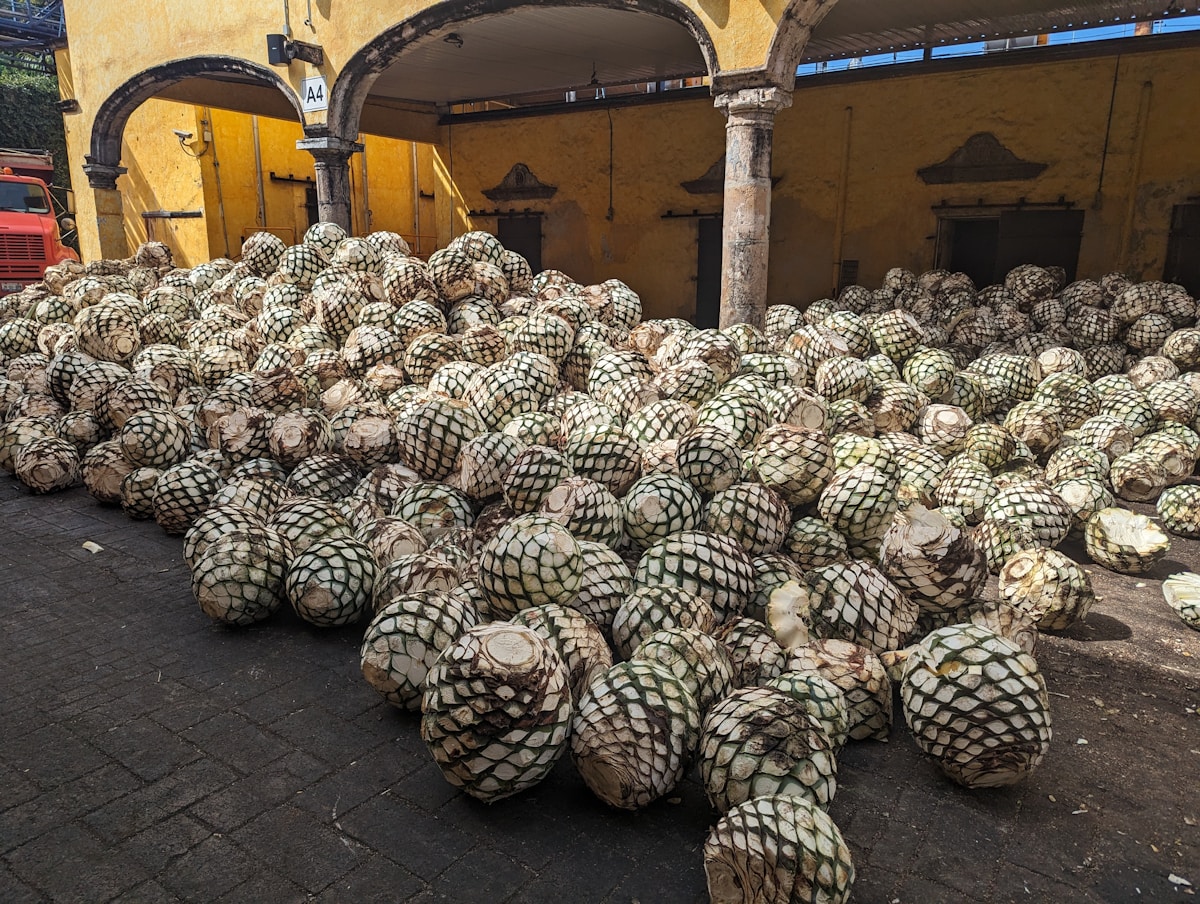
Tequila production begins in the agave fields. Blue Weber agave takes six to eight years to mature, and in highland regions, sometimes longer. When the plant reaches peak sugar content, a skilled agricultural laborer called a jimador harvests it using a specialized tool called a coa — a flat, circular blade on a long handle. The jimador strips away the pencas (leaves) from the agave, leaving behind the dense, starchy core known as the piña (named for its resemblance to a pineapple). A mature piña typically weighs between 30 and 70 kilograms, though highland specimens can exceed 100 kg. The harvest process is called the jima, and it remains almost entirely manual — no machine has replicated the jimador’s ability to judge ripeness and cut cleanly.
Before harvesting, the jimador identifies signs of maturity: the pencas flatten, the plant may attempt to send up a flowering stalk (quiote), and the piña’s sugar content (measured in Brix) reaches optimal levels. If the quiote is allowed to grow, it diverts sugars away from the piña, so jimadores remove it early. New plants are propagated from hijuelos — small offshoots (pups) that grow at the base of the mother plant — which are transplanted to begin the next growth cycle.
Cooking
The harvested piñas must be cooked to convert their complex carbohydrates (primarily inulin) into fermentable sugars. The cooking method is one of the most consequential decisions a distillery makes, and it directly affects the flavor profile of the finished tequila.
Traditional Brick/Stone Ovens (Hornos): Piñas are halved or quartered and slow-roasted in masonry ovens for 24 to 72 hours, then allowed to cool. This method caramelizes sugars, develops complex cooked-agave flavors, and produces a sweeter, richer distillate. It is the most traditional approach and is favored by producers emphasizing artisanal character.
Autoclaves: Stainless steel pressure cookers that reduce cooking time to 7 to 12 hours. Autoclaves are more efficient and consistent than hornos. They produce a cleaner, somewhat lighter agave character. Many respected producers use autoclaves without any sacrifice in quality — the key variable is time and temperature management.
Diffusers: The most controversial method in the industry. A diffuser is an industrial extraction system that shreds raw or lightly cooked agave and uses hot water or acid to strip sugars from the fiber. Diffuser-produced tequila can be made with minimal cooking, resulting in a markedly different flavor profile — often described as thinner, less complex, and lacking the roasted agave character that defines traditional tequila. Some producers use a hybrid approach, partially cooking piñas before diffuser extraction. Diffuser use is a significant point of contention in the trade, and many agave-focused bar programs actively avoid diffuser-produced brands.
Milling and Extraction
After cooking, the softened piñas must be crushed to extract the sweet juice (aguamiel, literally “honey water”). Traditional methods include:
Tahona: A massive volcanic stone wheel, typically weighing two tons or more, pulled in a circular pit by a mule or motor. The tahona crushes the cooked piñas slowly, and the resulting mash — fiber and juice together — often goes directly into fermentation. Tahona-milled tequilas tend to have more body, earthiness, and textural complexity. Very few distilleries still use this method as a primary extraction tool; Fortaleza is the most prominent example.
Roller Mill: The modern standard. Cooked agave passes through a series of mechanical rollers that shred the fiber and separate the juice. Efficient, consistent, and capable of high throughput.
In some tahona processes, the crushed agave fiber (bagazo) is fermented along with the juice, contributing additional flavor and body to the final spirit.
Fermentation
The extracted agave juice, called mosto, is transferred to fermentation vessels — either stainless steel tanks or, in traditional operations, open wooden vats (tinas). Yeast converts the sugars into alcohol over a period of two to five days or longer, depending on yeast strain, temperature, and the producer’s approach.
Some distilleries use proprietary cultivated yeast strains for consistency. Others rely on spontaneous fermentation from wild, ambient yeasts, which can add unpredictable but distinctive character. The choice of fermentation vessel, duration, and yeast is a significant stylistic lever. Longer, cooler fermentations generally produce more aromatic complexity.
For 100% agave tequila, no additional sugars may be introduced. For mixto tequila (see below), up to 49% of the fermentable sugars may come from non-agave sources, typically cane sugar or corn syrup, added at this stage.
Distillation
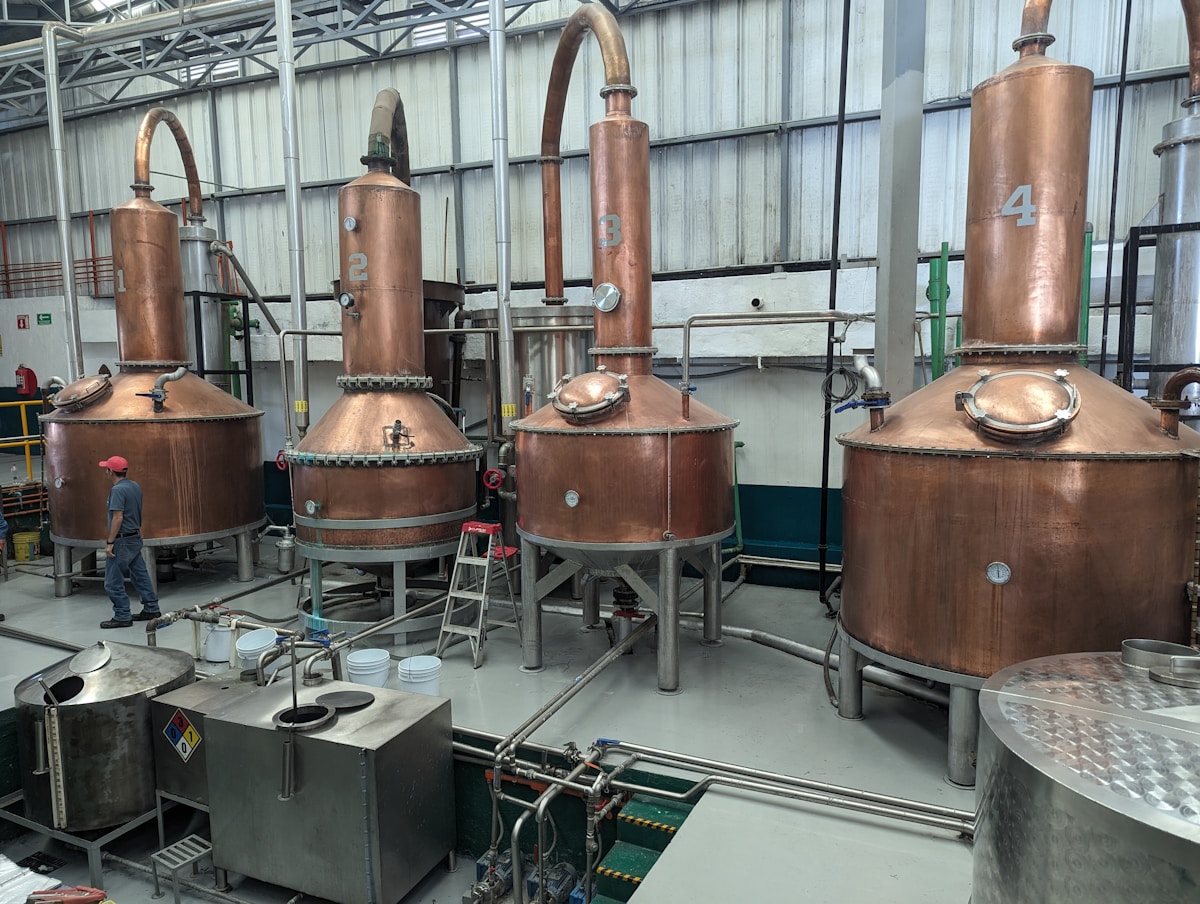
Tequila is distilled at least twice by law. The first distillation produces a low-proof liquid called ordinario (typically 20-30% ABV). The second distillation refines this into silver tequila, with the distiller making cuts between heads, hearts, and tails to shape flavor.
Most tequila is distilled in copper or stainless steel pot stills, though some producers use column stills — particularly for mixto production. Copper pot stills contribute to ester formation and sulfur removal, producing a smoother, more aromatic spirit. A small number of artisanal producers triple-distill, though this is uncommon and controversial, as excessive distillation can strip agave character.
Aging
After distillation, tequila is either bottled immediately (as Blanco) or transferred to oak barrels for maturation. The vast majority of aging is done in American white oak barrels, frequently ex-bourbon barrels, though some producers experiment with French oak, sherry casks, wine barrels, or new oak. Barrel selection, char level, warehouse climate, and duration all influence the final product.
Types and Categories
The NOM defines the following official classifications:
Blanco (Silver/Plata)
Unaged or aged fewer than 60 days in stainless steel or neutral oak. Blanco is the purest expression of the agave and the distillery’s process — there is no barrel influence to mask or complement the spirit. For industry professionals, blanco is the truest test of a producer’s raw quality. It showcases the terroir of the agave, the cooking method, and the distillation skill. High-quality blancos display cooked agave sweetness, citrus, pepper, mineral notes, and herbaceous complexity.
Joven (Gold)
Also called “oro.” Joven is technically an unaged tequila that has been blended with aged tequila, or — in the case of most mass-market “gold” tequilas — a mixto blanco with added caramel coloring and flavoring. The Joven category has a split identity: at the low end, it represents the cheapest, most heavily manipulated products in the category; at the high end, a small number of producers create genuine blends of blanco and aged expressions. Trade professionals should examine the label carefully — a Joven that is 100% agave and blended with reposado or añejo is a legitimate product. A mixto gold with additives is a different proposition entirely.
Reposado
Aged a minimum of two months and up to one year in oak containers of any size. Reposado (“rested”) is the best-selling category in Mexico. It balances agave character with light oak influence — vanilla, caramel, and spice notes begin to appear without overwhelming the underlying spirit. Reposado is the workhorse of the tequila back bar: versatile in cocktails, approachable for sipping, and available across a wide price range.
Añejo
Aged a minimum of one year and up to three years in oak barrels no larger than 600 liters. Añejo tequilas show pronounced barrel influence — deeper color, richer vanilla and toffee notes, dried fruit, and more integrated oak tannins. The best añejos maintain a clear agave backbone beneath the wood character. Overaged or heavily oaked añejos that lose their agave identity are a common pitfall in the category.
Extra Añejo
Aged a minimum of three years in barrels no larger than 600 liters. This classification was created in 2006 to accommodate the growing ultra-premium segment. Extra añejos often draw comparisons to aged cognac or whiskey — deep amber color, complex wood-driven flavors, and significant tannin structure. They command the highest prices in the category. The best examples retain recognizable agave character despite extended aging; the worst are essentially oak-flavored spirits with little agave identity remaining.
Cristalino
Not an official NOM classification but a commercially significant sub-category that has surged in popularity since the mid-2010s. Cristalino is an aged tequila (typically añejo or extra añejo) that has been charcoal-filtered to remove color, resulting in a clear spirit with some of the smoothness and mellowness of barrel aging but the visual appearance of a blanco. The filtration process also strips some flavor compounds, and opinions in the trade are divided: proponents value the accessibility and versatility; critics argue it removes complexity and serves primarily as a marketing exercise. Regardless, cristalino has become a major commercial force, particularly in the Mexican domestic market.
100% Agave vs. Mixto
This is the single most important distinction in the tequila category for trade professionals.
100% Agave tequila is made entirely from the sugars of blue Weber agave. The label must state “100% de agave” or “100% puro de agave.” It must be bottled at the source in Mexico (bottled at origin, or “envasado de origen”). This requirement exists to prevent dilution or manipulation after the tequila leaves the distillery. All premium, super-premium, and ultra-premium tequilas are 100% agave.
Mixto tequila must contain at least 51% blue Weber agave sugars, with the remaining 49% coming from other sources — typically cane sugar, piloncillo, or corn-derived sugars. Mixto tequila will not say “100% agave” on the label; it will simply say “tequila.” Critically, mixto is the only tequila category that may be shipped in bulk and bottled outside of Mexico, which is why some low-cost tequilas are bottled in the United States.
Mixto tequila also permits the use of certain additives: caramel coloring, oak extract flavoring, glycerin for mouthfeel, and sugar-based syrup. These are allowed up to specific limits even in some aged categories. The additive question has become increasingly prominent in the trade, with organizations and independent reviewers working to identify additive-free brands.
For bar programs and retail shelves, the 100% agave designation is the baseline for any serious tequila offering. Mixto has its place in well pours and high-volume applications, but it should not be confused with — or represented as — a premium product.
Regions and Terroir
Tequila’s terroir debate is real and consequential. The two primary production regions within Jalisco produce recognizably different styles of agave and, by extension, different styles of tequila.
Lowlands — Tequila Valley (El Valle)
The valley surrounding the town of Tequila sits at roughly 1,000 to 1,200 meters elevation. The volcanic soil is dark and mineral-rich. Agave grown here tends to mature faster and produce piñas with different sugar compositions than highland agave. Lowland tequilas are often characterized by:
- Earthy, mineral, and herbal notes
- More robust, peppery character
- Slightly vegetal or savory quality
- Bolder, more assertive agave flavor
Major producers in the valley include Jose Cuervo, Sauza, and many of the oldest distilleries in the category.
Highlands — Los Altos de Jalisco
The highlands sit at 1,800 to 2,100 meters elevation, with red, iron-rich clay soils. The climate is cooler and drier, and agave plants take longer to mature — sometimes 8 to 10 years. This extended growing period allows greater sugar accumulation, and highland piñas are often larger and sweeter. Highland tequilas tend to show:
- Brighter, fruitier, more floral character
- Citrus and tropical fruit notes
- Sweeter cooked-agave profile
- Lighter body and more aromatic finesse
Notable highland producers include Patrón, El Tesoro, Siete Leguas, and Tapatio.
The lowland vs. highland distinction is not absolute — cooking method, yeast, distillation, and aging all shape the final product — but it is a meaningful starting point for understanding stylistic differences. Educated staff should be able to articulate regional character when guiding customer selections.
Historically Notable Distilleries
La Rojeña — Jose Cuervo (NOM 1122)
Founded in the late 18th century, La Rojeña in the town of Tequila is the oldest continuously operating tequila distillery in the world. The Cuervo family’s 1795 royal license marks the formal beginning of commercial tequila production. Today, Jose Cuervo (owned by the Beckmann family, direct descendants of Cuervo) is the largest tequila producer globally. The portfolio spans from mass-market mixto (Cuervo Especial) to premium 100% agave expressions (Reserva de la Familia). For all the criticism leveled at its volume products, Cuervo’s historical significance and the quality of its top-tier offerings are beyond dispute.
La Perseverancia — Sauza (NOM 1102)
Founded by Don Cenobio Sauza in 1873, La Perseverancia sits in the heart of the Tequila Valley. Sauza’s contributions to the industry include championing blue Weber agave as the definitive tequila variety and driving early export efforts. The distillery was acquired by Beam (now Beam Suntory) in 2005. The Sauza brand portfolio ranges from value mixto to the premium Tres Generaciones line. Historically, the Sauza family’s advocacy for the Denomination of Origin helped create the legal framework that protects the category today.
Hacienda San José del Refugio — Herradura (NOM 1119)
Located in the town of Amatitán in the Tequila Valley, Herradura has been producing tequila since 1870. The distillery is notable for its commitment to estate-grown agave, traditional brick-oven cooking, and natural fermentation. Herradura was the first major producer to market a reposado (in 1974) and an extra añejo (Selección Suprema, introduced before the official classification existed). The brand was acquired by Brown-Forman in 2007. The distillery’s hacienda setting and traditional processes make it one of the most visited production facilities in the region.
Patrón — (NOM 1492)
Founded in 1989, Patrón is a relatively young brand that played an outsized role in transforming tequila’s image in the United States. By positioning itself as ultra-premium and investing heavily in marketing, Patrón helped shift American consumer perception of tequila from a low-end shot spirit to a luxury category. The distillery in Atotonilco El Alto (Los Altos) uses a combination of tahona and roller mill extraction, blending the two distillates. Patrón was acquired by Bacardi in 2018 in a deal reportedly valued at $5.1 billion — a transaction that underscored tequila’s commercial ascent.
La Fortaleza — Fortaleza (NOM 1493)
Fortaleza, founded by Guillermo Sauza (a fifth-generation descendant of Don Cenobio Sauza), represents the artisanal pole of the tequila spectrum. The distillery, built on the site of the original Sauza family property in the town of Tequila, uses methods that most producers abandoned decades ago: brick oven cooking, tahona crushing, open-air wooden-vat fermentation, and small copper pot still distillation. Every step is slow, manual, and low-volume. Fortaleza has become a benchmark for bartenders and agave enthusiasts who value traditional process, and its blanco is frequently cited as one of the finest expressions of lowland tequila available. Production is small, and allocation can be limited.
Key Terminology and Glossary
A working command of the following terms is essential for any beverage professional operating in the agave spirits space.
| Term | Definition |
|---|---|
| Agave tequilana Weber azul | The full botanical name of blue Weber agave, the only agave species permitted in tequila production. |
| Aguamiel | Literally “honey water.” The sweet juice extracted from cooked agave piñas before fermentation. |
| Autoclave | A stainless steel pressure vessel used to steam-cook agave piñas more quickly than traditional ovens. |
| Bagazo | The fibrous agave pulp remaining after juice extraction. Sometimes included in fermentation (especially in tahona processes) and later used as compost or fuel. |
| Coa | The flat, circular-bladed tool used by jimadores to harvest agave. |
| CRT (Consejo Regulador del Tequila) | The regulatory body that certifies and monitors all tequila production for compliance with the NOM and Denomination of Origin. |
| Denomination of Origin | The legal geographic designation restricting where tequila may be produced and what may be called tequila. |
| Diffuser | An industrial extraction system that uses hot water or steam to strip sugars from raw or minimally cooked agave fiber. Controversial for its impact on flavor. |
| Horno | A traditional masonry oven (brick or stone) used to slow-cook agave piñas. Plural: hornos. |
| Hijuelo | A young agave offshoot or “pup” that grows at the base of a mature plant, used for propagation. |
| Jima | The harvest of agave plants. The act of cutting the piña from the plant and trimming the leaves. |
| Jimador | The skilled agricultural worker who harvests agave. The jimador selects mature plants and uses a coa to trim and extract the piña. |
| Mixto | Tequila made with a minimum of 51% blue Weber agave sugars, with the balance from other sugar sources. |
| Mosto | The agave juice or must that undergoes fermentation. “Mosto muerto” refers to the fully fermented liquid before distillation. |
| NOM (Norma Oficial Mexicana) | The official Mexican standard governing tequila production. The four-digit NOM number on a bottle identifies the distillery of production. |
| Ordinario | The low-proof liquid produced by the first distillation, before the second (refining) distillation. |
| Penca | A leaf of the agave plant. Pencas are trimmed away during the jima to expose the piña. |
| Piña | The core or “heart” of the agave plant after the leaves are removed. Named for its resemblance to a pineapple. The piña contains the starches that are converted to fermentable sugars. |
| Pulque | A traditional, mildly alcoholic fermented beverage made from the sap (aguamiel) of various agave species. Predates distilled tequila by centuries. |
| Quiote | The flowering stalk that a mature agave sends up. It is typically removed to prevent sugar diversion from the piña. |
| Tahona | A large stone wheel (typically volcanic basalt) used to crush cooked agave piñas for juice extraction. One of the oldest milling methods, now rare. |
| Tina | A wooden fermentation vat, traditionally made from pine. Used in artisanal production for open-air fermentation. |
Conclusion
Tequila rewards depth of knowledge. The category’s regulatory framework, regional diversity, and range of production methods create a spectrum of quality and style that rivals any spirit in the world. For beverage professionals, the path to credibility starts with understanding the fundamentals outlined here: the legal structure that protects the category, the production decisions that shape flavor, the distinction between 100% agave and mixto, and the terroir differences between highlands and lowlands. From there, the real education happens bottle by bottle, pour by pour.